

Welcome to FUTA, fresher. Your first resumption can feel like someone dropped you in a new city and said, "Good luck, you will figure it out." Relax, you will. From clearance and finding your way around South Gate and North Gate to sorting out your hostel, transport, food, and first-week spending, this guide will help you settle in without unnecessary stress.
One important thing first: official resumption and clearance dates can change. Always confirm the current dates and instructions through the official FUTA portal, school notices, and other official communication before making plans.
Before you resume: paperwork and mindset
Before you pack your bags, sort out your documents. Keep your admission documents, payment receipts, identification documents, passport photographs, credentials, and any other documents requested by FUTA in one safe folder. If you can, keep digital copies on your phone and somewhere secure online too.
Clearance can involve moving between different offices and completing different requirements, so do not wait until the last minute to discover that one important document is missing.
Create a simple resumption checklist:
- Admission and school documents
- Payment receipts
- Identification documents
- Passport photographs
- Medical or other required documents
- Hostel or accommodation information
- Basic clothing and personal items
- Emergency money
- Phone charger and power bank
Also prepare your mind for the reality of student life. You are entering a new environment where you will meet people from different places, manage your own time, and make decisions without someone constantly reminding you.
Your first goal is not to know everything. Your first goal is to understand how things work.
And please, do not spend your entire resumption money trying to look like you own the campus. Sapa has no respect for fashion.
Clearance without losing your mind
Clearance is one of those fresher experiences that sounds simple until you start moving from one requirement to another.
The best approach is to understand what you need before you start moving around. Confirm the current clearance instructions from FUTA and follow the official process. Ask questions when you are unsure, especially when an instruction involves payment, documentation, or where to submit something.
Keep your documents organised. Do not carry every paper you own in one messy envelope. Separate important originals from photocopies and keep your originals protected.
Take note of offices, locations, opening times, and any instructions given to you during the process. If another fresher tells you something different from an official notice, verify it before acting.
You will also meet many people during clearance. This is actually a good thing. Your coursemates, returning students, departmental representatives, and other freshers can help you understand campus routines.
Just remember that helpful information should still be verified. "My guy said so" is not an official school memo.
South Gate, North Gate, and finding your way
One of the first things you need to understand about FUTA is how to move around the campus and its surrounding areas.
South Gate and North Gate will become familiar names very quickly. You will also hear locations such as Obanla, ETF, CCE, different lecture areas, hostels, lodges, and other landmarks mentioned casually by students who already know their way around.
As a fresher, it is completely normal to get confused at first.
Start by learning the major landmarks around where you live, where your department is located, where you can get food, where you can access important services, and the routes you are likely to use regularly.
Save useful locations on your phone when possible. If someone gives you directions, repeat the important landmarks back to them so you know you understood correctly.
If you are staying outside campus, learn the easiest route between your lodge, the nearest gate, and your main academic locations.
Your first week is basically FUTA's unofficial orientation challenge. You may get lost once or twice. It happens.
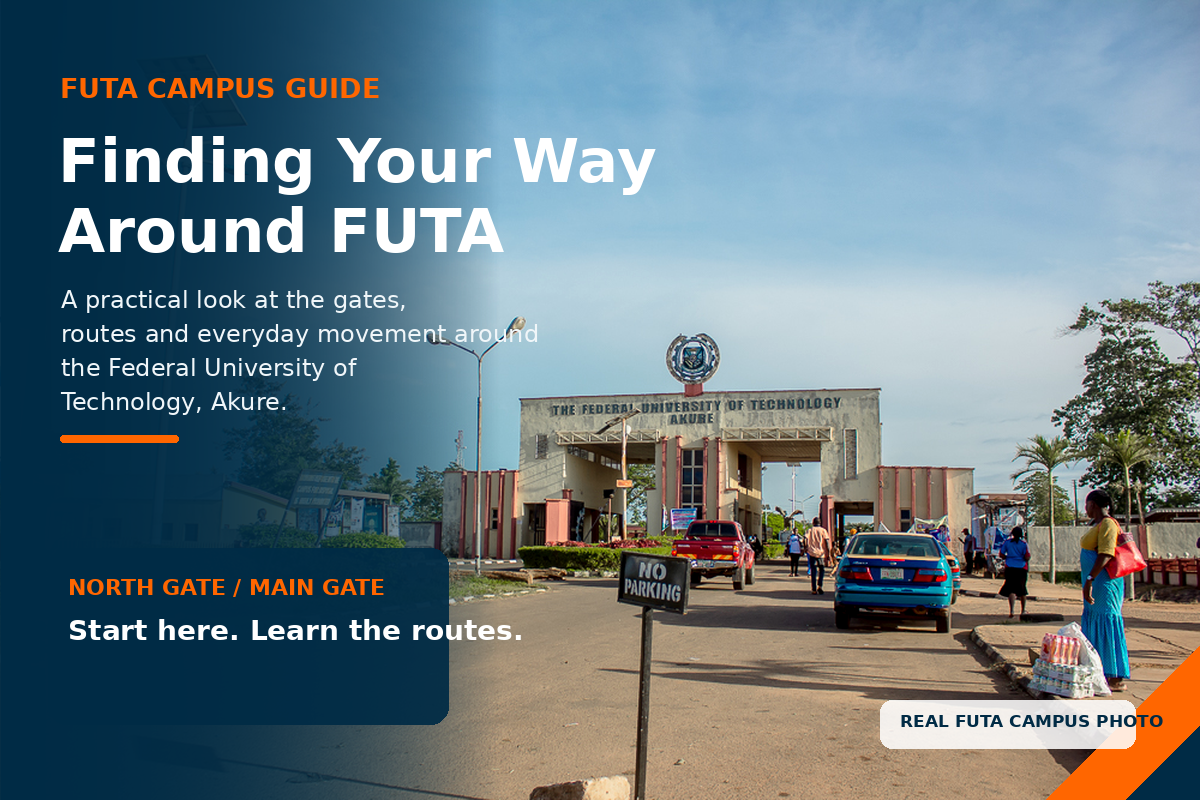
FUTA students navigating around South Gate and North Gate areas while finding their way around campus
What to buy in week one (and what can wait)
The first week is not the time to buy everything you see.
Start with essentials. Your exact needs will depend on whether you are staying in a hostel or lodge, but basic items may include toiletries, clothes, food containers, water bottle, bedding, writing materials, chargers, and other everyday necessities.
For your academic side, wait until you know what your lecturers and department actually require before buying large quantities of materials.
For accommodation, inspect the space before spending heavily on things you may not need. If you are sharing a room, discuss basic arrangements with your roommates early.
Also create a simple weekly budget. Divide your available money into food, transport, academic needs, personal expenses, and emergency money.
That last category matters.
A fresher with zero emergency money is one unexpected expense away from becoming a motivational speaker on WhatsApp.
Getting around FUTA without getting played on transport
Moving around FUTA and the surrounding areas is going to be part of your everyday routine.
You may use Keke, walk, or combine different transport options depending on where you are going. Fares can vary based on route, time, demand, weather, and other conditions, so do not assume that one fare will always apply.
Learn the common zones and routes you use most often. Before entering a ride, confirm the expected fare and destination clearly.
If you are using a campus mobility service, look for features that make the trip easier to understand, such as clear zones, fare information, and live trip tracking.
This is one area where having a reliable campus-focused app can make everyday movement less stressful. DexTask is being built around verified students and campus mobility, including campus rides, zones, fares, and live tracking.
The goal is simple: spend less time wondering where your ride is and more time getting where you need to go.
Surviving the first 7 days
Your first seven days are mainly about settling into a routine.
Do not try to solve your entire university life in one week. Learn where you need to go, understand your timetable, meet people in your department, find reliable food options, and get comfortable with your accommodation.
Day 1 to 2: Understand your environment
Find your important locations. Know your accommodation route, department, lecture areas, nearest food spots, transport points, and major gates.
Day 3 to 4: Build your routine
Start understanding when you need to leave your accommodation for classes. Test your normal routes and see how long they take.
Day 5 to 6: Meet people
Get to know your coursemates and some returning students. Good connections can save you plenty of stress later, especially when you need information about classes, assignments, campus services, or events.
Day 7: Review your spending
Check what you have spent during the week. If your money disappeared faster than expected, adjust your budget immediately.
Do not wait until week three to discover that your food budget has become "God will provide."
Also remember that university life is bigger than lectures. FUTA has opportunities to learn, work, build friendships, join communities, develop skills, and discover what you are good at.
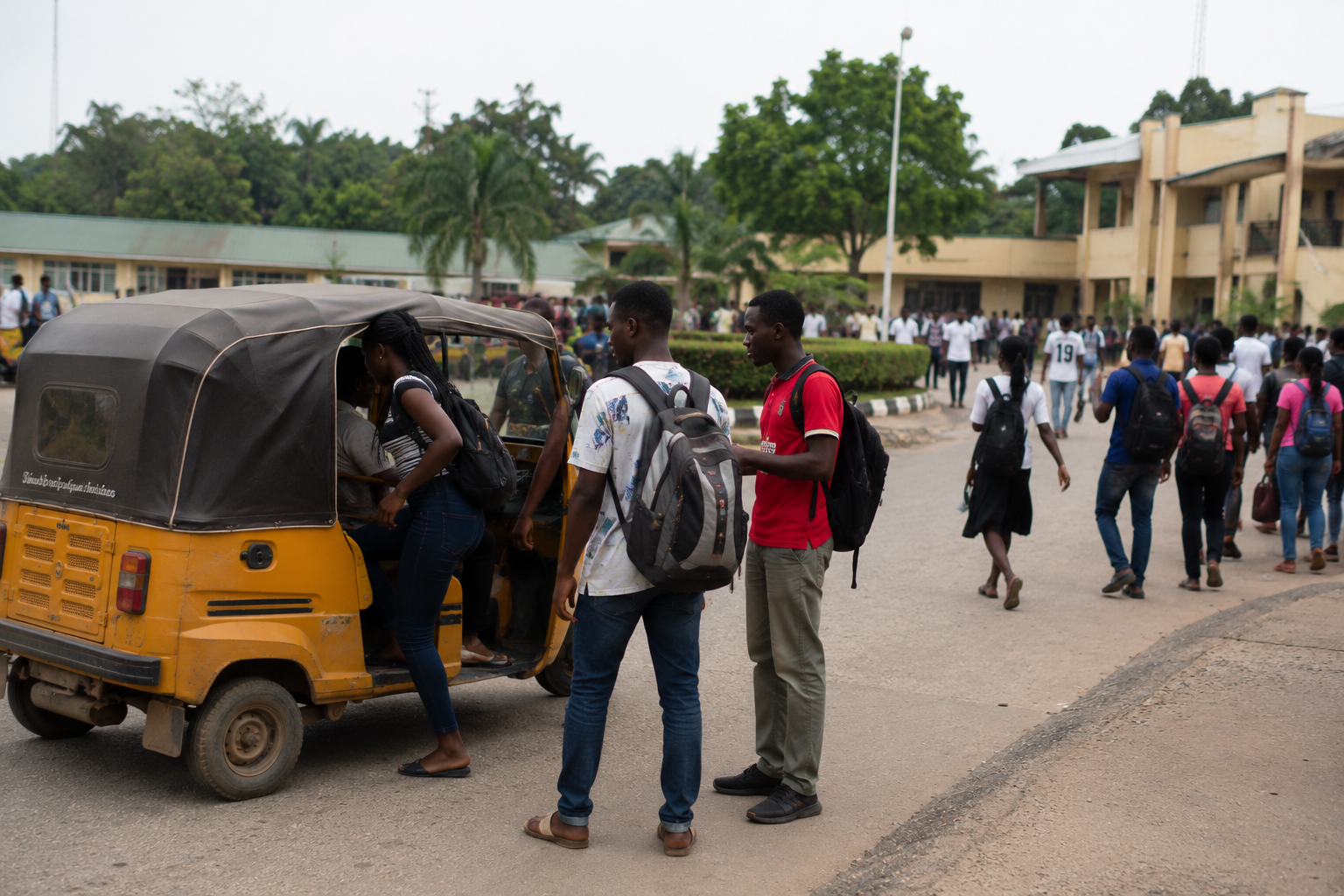
FUTA students using campus transport and moving between academic areas during their first week
A smarter campus stack
As you settle into FUTA, think about the tools and systems that can make everyday student life easier.
You will probably have separate apps and services for communication, payments, transport, buying things, finding opportunities, and getting help. The problem is that managing everything separately can become stressful.
That is part of the reason DexTask exists.
DexTask is a campus super app built for verified students, starting with FUTA. It brings campus mobility, student gigs and errands, and a campus marketplace into one connected ecosystem.
For mobility, students can access campus-focused rides, zones, fares, and live tracking. For gigs and errands, students can discover opportunities while payment protection through escrow helps create accountability between both sides. The marketplace is designed around the things students actually buy and sell within their campus communities.
The bigger idea is simple: one trusted student identity, one campus ecosystem, and fewer unnecessary friction points.
As a fresher, you do not need to master every feature immediately. Start with what you need, whether that is finding a ride, discovering a gig, or buying and selling around campus.
Ready for FUTA?
Your first resumption may feel overwhelming, but after a few days, the places that looked confusing will start becoming familiar.
Keep your documents safe. Confirm official information. Budget your money. Learn your routes. Ask questions. Meet people. And do not be afraid to admit that you are still figuring things out.
Every returning student was once the fresher asking, "Please, where is this place?"
If you want one campus-focused app to help you navigate mobility, gigs, errands, and campus commerce, get DexTask here:
Welcome to FUTA, fresher. Your journey is just getting started.
Written by
Kpenhangen Barnabas Tersue · DexTask
Publisher: DexTask
Published on the DexTask blog covering campus mobility, student infrastructure, and product updates across Nigeria and Africa.
Related posts
How to Move Around FUTA: Shuttle & Keke Fares Explained
Learn how to use DexTask Rides & Routes to find your way around FUTA, book a campus keke, check your fare, track your ride, and rate your operator.
How to Spot and Avoid Fake Off-Campus House Agents
Looking for a house outside campus? Learn how to identify fake agents, verify property listings, avoid suspicious payments and make safer accommodation decisions.
10 Best Side Hustles for Nigerian Students in 2026
Looking for a side hustle as a Nigerian student? Here are 10 realistic ways to earn around your lectures, plus how DexTask can help you turn your skills into campus opportunities.